
Cleaning and treatment of fungus-infected nails
A fungal infection gradually changes the nail’s colour, thickens it and alters its structure and shape. Starting treatment without removing the affected material makes topical remedies ineffective. This approach takes longer than planned, comprehensive treatment. Cleaning with powered and hand instruments by a podologist significantly speeds up the treatment process and is essential to a successful outcome.
Common signs of a fungal infection
A fungal infection is confirmed by a laboratory test. If needed, you can see a dermatologist so that treatment follows a comprehensive plan.
- Nail thickening, separation from the nail bed and breakdown of the nail plate
- Colour change — yellowish, white or dark patches
- Deformation of the plate, uneven surface
- Unpleasant smell, itching around the nail
What the podologist does
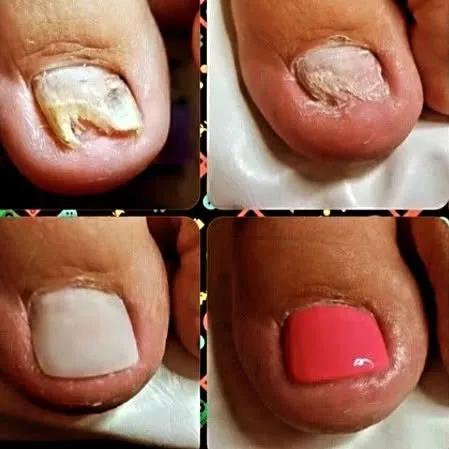
Using powered and hand instruments, we painlessly remove damaged nail and cuticle tissue down to healthy tissue. Cleaning relieves discomfort when wearing shoes and allows topical medication to reach the treatment area effectively.
When needed, the nail is aesthetically restored with a special medical material so that it looks presentable during treatment.
Instruments are autoclave-sterilised for every patient. The working environment is disinfected and sterile, which is important when treating fungal infections.
Care for other nail changes
Nail changes can be linked to injury, pressure from footwear or other causes. We assess the condition and recommend suitable care, treatment or further investigation.
Frequently asked questions
Is a fungal nail infection contagious?
Yes, infection can spread through shared footwear and instruments. Avoid sharing personal items and maintain good foot hygiene.
How long does treatment take?
Nail recovery takes time. The duration depends on the extent of infection, nail growth and treatment. We agree an individual appointment schedule.
How is treatment chosen?
Treatment depends on the diagnosis and the nail’s condition. A topical medicine may be suitable, while some cases need additional treatment prescribed by a doctor. Nail cleaning may form part of a combined care plan.
Can I have decorative nail polish?
This depends on the nail and the medicine being used. Please discuss polish or aesthetic restoration with your treating specialist first.