
Calluses, hyperkeratosis & cracked heels
Corns, thickened skin and cracked heels are often linked to pressure, friction and dryness. We examine your feet, treat the affected areas and explain how to care for your skin at home.
What we treat
- Dry calluses and thickened skin (hyperkeratosis)
- Core (root) calluses — corns
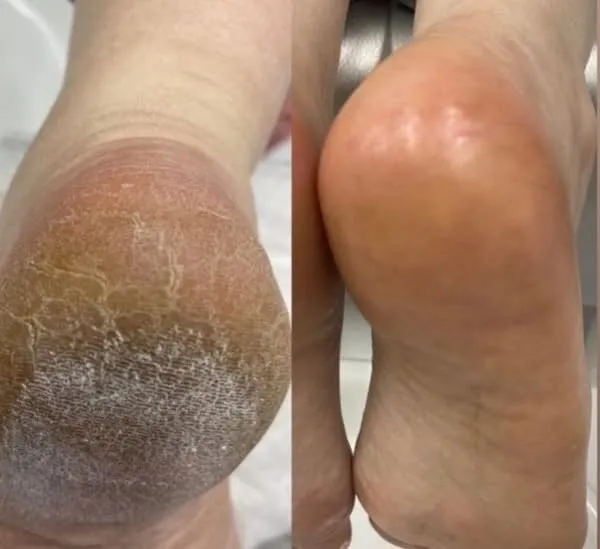
- Cracked heels — from superficial to deep and painful
- Hardened skin at pressure points
How the procedure works
We carefully treat thickened skin and corns using powered instruments, adapting the procedure to the condition of your skin.
For cracks, we assess their depth and the surrounding skin before selecting appropriate treatment and protective care.
After the procedure, we recommend a moisturiser, discuss footwear and consider ways to reduce pressure on the affected area.
Care for recurring corns and calluses
Repeated pressure or friction can cause corns and calluses to return. During examination, we consider footwear, foot shape and how pressure is distributed.
Corns and cracks need particular attention when you have diabetes. Seek medical advice promptly for a new wound, redness or swelling.
Frequently asked questions
How do you keep the procedure comfortable?
We work carefully and take skin sensitivity into account. Please tell us if you feel pain or discomfort so that we can adjust the treatment.
How many appointments will I need?
This depends on your skin and the cause of the problem. After examination, we discuss a care plan and whether a follow-up is needed.
Can I use a pumice stone?
Home care should suit your skin. Do not use a pumice stone on painful or bleeding cracks. If you have diabetes, discuss callus care with a specialist.
What causes cracked heels?
Dryness, thickened skin, footwear and pressure may all contribute. We assess these factors and recommend another specialist when appropriate.