
Ingrown toenail treatment
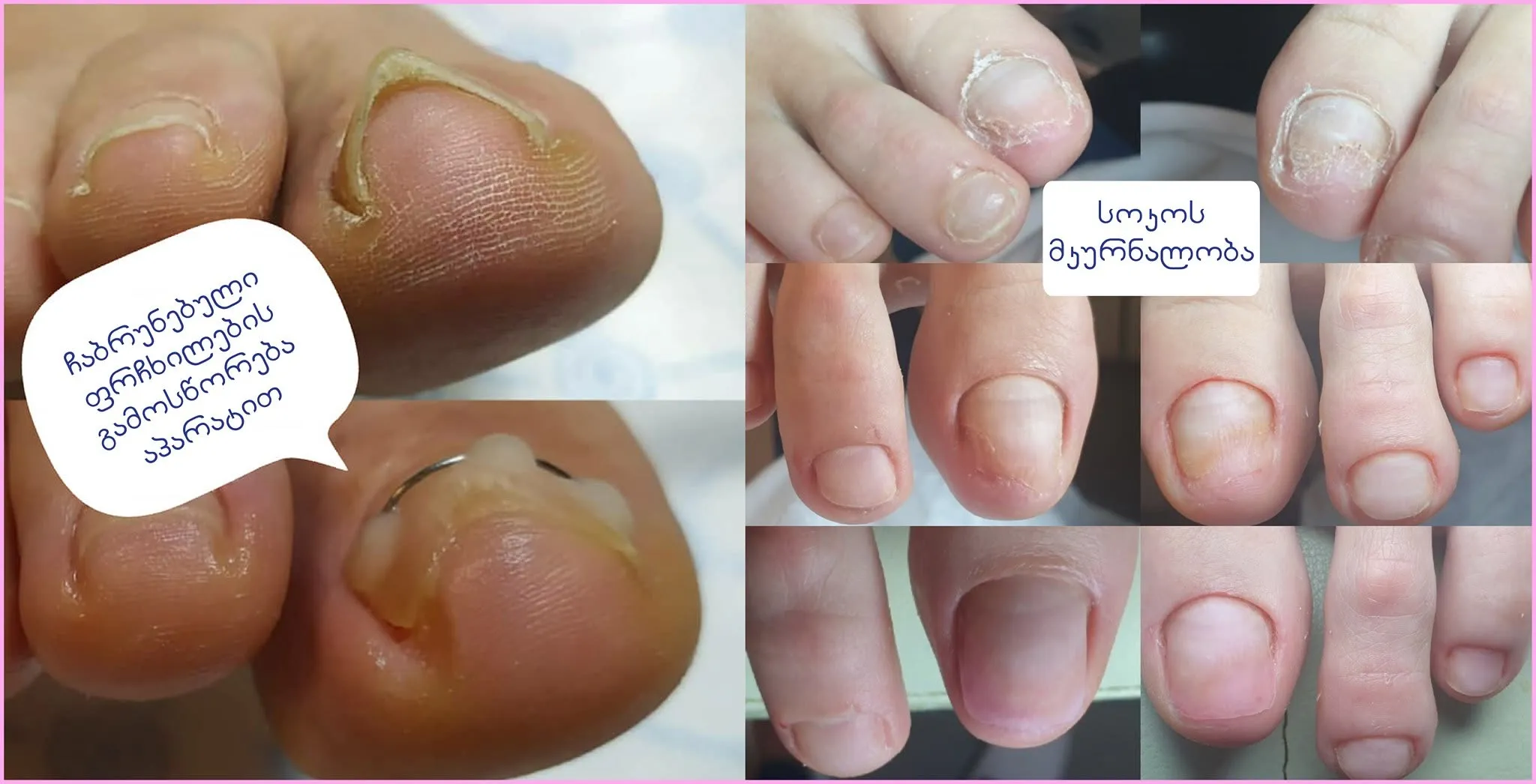
An ingrown toenail is more than discomfort. The nail edge grows into soft tissue, causing pain and inflammation. Delaying treatment leads to complications, infection and the formation of granulation tissue. Timely intervention can resolve the problem without surgery using corrective bracket systems (orthonyxia).
When to arrange a consultation
If you have diabetes and an ingrown toenail, seek medical advice promptly. Pus, spreading redness or fever need medical assessment.
- Pain when walking or pressing on the toe
- Redness and swelling along the nail fold
- Discharge or pus at the nail edge
- Granuloma — overgrowth of tissue
- The nail keeps growing back in after trimming
How the treatment works
At the first appointment, we examine the nail and surrounding skin, listen to your concerns and discuss previous treatment.
We treat the nail edge and affected area according to their condition. The examination helps us decide whether a corrective system is appropriate.
Every instrument goes through staged processing: disinfection, ultrasonic cleaning and autoclave sterilisation.
Orthonyxia: how the bracket works
A corrective brace or plate is attached to the nail to guide its growth gradually. The system is chosen to suit the nail’s shape and condition.
We provide individual care instructions and a follow-up schedule.
The aim of correction is to improve nail shape and reduce pressure on the surrounding tissue.
Ongoing care
Suitable footwear and appropriate nail care support treatment. We explain how to reduce pressure and which actions to avoid.
If conservative care is not enough or there are signs of infection, we recommend assessment by the appropriate specialist.
Frequently asked questions
Will the procedure hurt?
We work gently and take your comfort into account. Inflamed tissue may be sensitive, so we choose a treatment method after examining the area.
How long does treatment take?
This depends on the nail’s condition, growth and the method chosen. We discuss the treatment plan and follow-up appointments at your consultation.
How should I care for the nail at home?
Do not cut deeply into the ingrown corner or try to remove it yourself. Choose footwear that does not press on the toe. We provide individual advice after examination.
When is a nail brace used?
A corrective system can be used when the nail’s condition allows it. The method is selected individually; some cases need a surgical consultation.
Do you see patients with diabetes?
Yes, we plan care around your health. Please tell us about your diabetes when booking so we can arrange the assessment you need.